




Dangerous demon dog

ImmortelObe/ConfusingImages
What is happening here? Man’s best friend has somehow got hold of a sword and looks displeased.
Perhaps these drunk lads have summoned (and then angered) a hell hound.
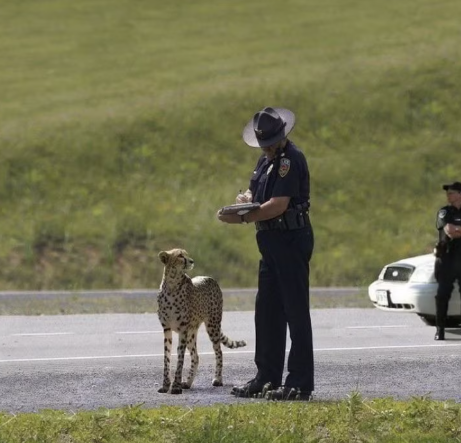
Cheetah and the police
ConfusingImages/jawreips
“Do you know why I pulled you over sir?”
“Huh?”
“Do you know how fast you were going?”
This photo certainly needs more context and we enjoy imagining what might be happening. Though we suspect it might be Photoshopped.
Mario!

ConfusingImages/Nox_The_Undying
This looks like one of those inexplicable stock photos which is completely illogical and for a very specific search that no one will search for.
Mario is certainly having a good time though.
Cow transport

ConfusingImages/nuggett_trash
What’s going on here then? A cow being transported by crane into a boat? Does this happen a lot or is this chap starting his own Noah’s ark?
Boris Johnson on a swing

ConfusingImages/JetroNetro
British Prime Minister Boris Johnson has been snapped many a time doing all sorts of weird and wonderful things. But we have no clue what’s happening here. The small child in the background doesn’t understand it either.
Ninja turtle escape

ConfusingImages/Vertical62
One of the Teenage Ninja Mutant Turtles has escaped from the sewers and is wreaking havoc in this poor soul’s bathroom.
Clearly a case of too much pizza.
Bag man

In today’s fast-moving social media environment, rumors about celebrities can spread globally within minutes, often before any facts are confirmed. A recent example of this pattern involves a viral post claiming that a well-known music artist had been arrested, which circulated widely across short-form avideo platforms. The post used sensational language, edited clips, and phrases like “check the first comment” to encourage engagement, leading many users to question what was real and what was fabricated.
The situation reportedly began when an unverified video surfaced online showing a public figure being escorted by authorities. However, the clip lacked context, did not show clear identification, and was quickly taken out of proportion by accounts seeking views. Within hours, captions began appearing across different platforms suggesting that major artists were involved, despite no official confirmation from law enforcement or representatives.
As the rumor spread, fans of the artists mentioned in the posts began expressing confusion and concern. Some users shared the content further without checking its authenticity, while others attempted to correct the misinformation by pointing out that no credible news outlets had reported any such arrest. This created a cycle in which speculation and correction competed for attention in the same digital spaces.
Media analysts note that this type of situation is increasingly common in the era of algorithm-driven content. Posts that are shocking or emotionally charged tend to perform better, regardless of their accuracy. As a result, misleading information can sometimes travel faster than verified reporting. In many cases, by the time corrections appear, the original false claim has already reached a wide audience.
The music industry, in particular, is often affected by this phenomenon. High-profile artists frequently become subjects of rumors due to their visibility and large fan bases. Experts emphasize that public figures are especially vulnerable to edited clips, out-of-context images
Representatives and official sources typically respond to such rumors by issuing clarifications or ignoring them entirely, depending on the situation. However, the rapid spread of content on platforms like short-form video apps and repost pages makes it difficult to fully contain misinformation once it begins trending.
Digital literacy advocates encourage users to verify claims before sharing them, especially when posts rely on vague wording such as “check the comments” or “breaking news” without citing credible sources. They also recommend checking established news organizations or official statements before drawing conclusions about any incident involving public figures.
Ultimately, the incident highlights a broader issue in online culture: the tension between viral entertainment and factual accuracy. While social media allows information to travel quickly and reach global audiences, it also increases the risk of rumors being mistaken for reality. As users continue to engage with fast-paced content, the ability to critically evaluate what is seen online remains an important skill in separating fact from fiction.
