
A 𝓈𝒽𝓸𝒸𝓀𝒾𝓃𝑔 and unverified video has surfaced online, making explosive and salacious claims about the late rapper Nipsey Hussle, his partner Lauren London, and music mogul Sean “Diddy” Combs. The video, posted by commentator Benzino on the “Product TV” platform, alleges a complex web of infidelity and industry exploitation that is now rippling through social media.
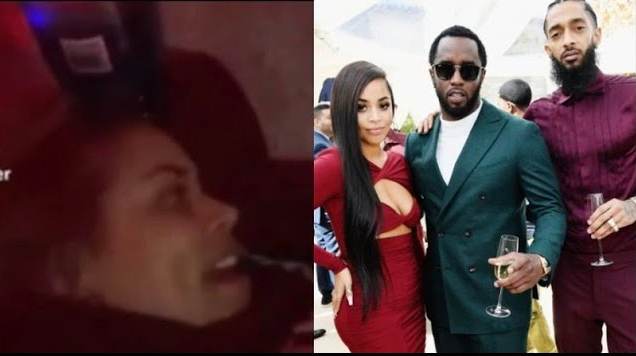
The core allegation posits that Lauren London was involved in a relationship with Diddy both during and after her relationship with Nipsey Hussle. The video’s narrator claims Nipsey Hussle personally witnessed an intimate encounter between London and Diddy in a studio but chose not to intervene. This alleged inaction is framed as a calculated decision to preserve his career ambitions.
According to the narrative presented, Diddy represented a powerful “gatekeeper” in the music industry during that era. The video suggests that access to such figures often required personal compromises, drawing a parallel to historical Hollywood exploitation. The implication is that Nipsey Hussle tolerated the situation to maintain his professional standing and proximity to industry power.
The claims extend further, alleging that London served as the initial connection between Hussle and Combs. This detail is used to explain the alleged studio incident, with the narrator insisting Hussle’s documented character makes it impossible he would ignore such a scene without a powerful external reason tied to his career trajectory.
These 𝒶𝓁𝓁𝑒𝑔𝒶𝓉𝒾𝓸𝓃𝓈 arrive amidst a severe legal storm for Sean Combs, who faces multiple civil lawsuits alleging 𝒶𝓈𝓈𝒶𝓊𝓁𝓉 and trafficking, with a federal criminal investigation also underway. The video attempts to link these new claims to that broader context, portraying Diddy as a predatory figure who leveraged his influence.
The video transcript is filled with colloquialisms, coded language, and repeated disclaimers like “allegedly” and “pause.” It references other figures like Cassie, Diddy’s former girlfriend and a recent plaintiff against him, though her specific role in the described scenario remains unclear from the chaotic narration.
No evidence is presented to substantiate any of these claims beyond the anecdotal storytelling of the video’s host. The narrative heavily relies on speculation about private interactions and interpretations of past events, including a reference to Hussle walking out of a 2018 interview with DJ Akademiks.
Representatives for Lauren London and the estate of Nipsey Hussle have not publicly commented on these specific 𝓿𝒾𝓇𝒶𝓁 𝒶𝓁𝓁𝑒𝑔𝒶𝓉𝒾𝓸𝓃𝓈. Given the gravity of the claims and the ongoing legal proceedings involving Diddy, the video has ignited fierce debate and scrutiny online.
Industry observers note the video’s timing, suggesting it exploits the current climate of 𝒶𝓁𝓁𝑒𝑔𝒶𝓉𝒾𝓸𝓃𝓈 against Combs. The story taps into long-standing rumors and conspiracy theories within hip-hop circles, repackaging them with the urgency of Diddy’s ongoing legal battles.
In today’s fast-moving social media environment, rumors about celebrities can spread globally within minutes, often before any facts are confirmed. A recent example of this pattern involves a viral post claiming that a well-known music artist had been arrested, which circulated widely across short-form video platforms. The post used sensational language, edited clips, and phrases like “check the first comment” to encourage engagement, leading many users to question what was real and what was fabricated.
The situation reportedly began when an unverified video surfaced online showing a public figure being escorted by authorities. However, the clip lacked context, did not show clear identification, and was quickly taken out of proportion by accounts seeking views. Within hours, captions began appearing across different platforms suggesting that major artists were involved, despite no official confirmation from law enforcement or representatives.
As the rumor spread, fans of the artists mentioned in the posts began expressing confusion and concern. Some users shared the content further without checking its authenticity, while others attempted to correct the misinformation by pointing out that no credible news outlets had reported any such arrest. This created a cycle in which speculation and correction competed for attention in the same digital spaces.
Media analysts note that this type of situation is increasingly common in the era of algorithm-driven content. Posts that are shocking or emotionally charged tend to perform better, regardless of their accuracy. As a result, misleading information can sometimes travel faster than verified reporting. In many cases, by the time corrections appear, the original false claim has already reached a wide audience.
The music industry, in particular, is often affected by this phenomenon. High-profile artists frequently become subjects of rumors due to their visibility and large fan bases. Experts emphasize that public figures are especially vulnerable to edited clips, out-of-context images, and fabricated captions designed to attract clicks.
Representatives and official sources typically respond to such rumors by issuing clarifications or ignoring them entirely, depending on the situation. However, the rapid spread of content on platforms like short-form video apps and repost pages makes it difficult to fully contain misinformation once it begins trending.
Digital literacy advocates encourage users to verify claims before sharing them, especially when posts rely on vague wording such as “check the comments” or “breaking news” without citing credible sources. They also recommend checking established news organizations or official statements before drawing conclusions about any incident involving public figures.
Ultimately, the incident highlights a broader issue in online culture: the tension between viral entertainment and factual accuracy. While social media allows information to travel quickly and reach global audiences, it also increases the risk of rumors being mistaken for reality. As users continue to engage with fast-paced content, the ability to critically evaluate what is seen online remains an important skill in separating fact from fiction.
