
**My Skin Bruises Even After Light Pressure Lately, and I Won’t See My Doctor for Weeks. What Should I Do Now?**
*Full article 👇 💬*
Noticing unexplained bruises on your skin can be unsettling—especially when they seem to appear after the slightest bump, pressure, or even without any clear injury at all. If this is new for you, and your doctor’s appointment is still weeks away, it’s completely normal to feel anxious and unsure about what to do next.
Take a breath.
This article is here to help you think clearly, observe wisely, and take **safe, practical steps** while you wait—without jumping to worst-case conclusions.
## **First, Let’s Acknowledge the Worry**
Bruising easily can feel alarming because it’s so visible. You may find yourself checking your arms, legs, or hands constantly, wondering:
* *Why is this happening now?*
* *Is something wrong with my blood?*
* *Am I ignoring something serious?*
That concern makes sense. But it’s important to remember one thing upfront:
**Easy bruising has many possible causes—most of them not dangerous.**
The key right now is **observation, documentation, and knowing when to act sooner.**
## **What a Bruise Really Is (In Simple Terms)**
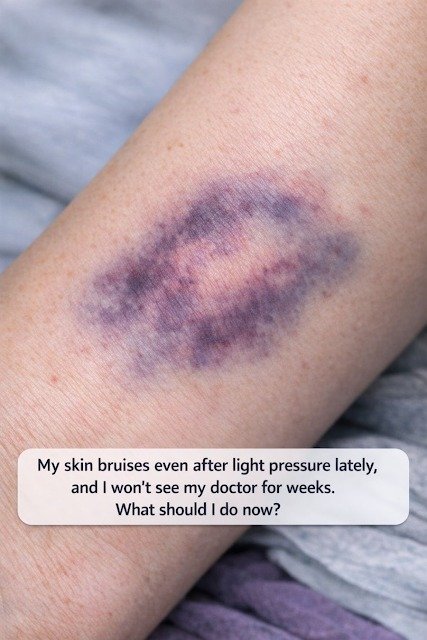
A bruise forms when tiny blood vessels under the skin break and leak blood into surrounding tissue. This can happen after impact—but also when those vessels are more fragile, or when clotting takes longer than usual.
If bruises are showing up after very light pressure—like leaning on something, carrying groceries, or resting your arms on a desk—it usually means **your skin, blood vessels, or clotting process is more sensitive than before**.
That sensitivity can change for many reasons.
—
## **Common, Non-Emergency Reasons Bruising Can Increase**
While only a healthcare professional can determine the cause, many everyday factors can make bruising more noticeable or frequent:
### **1. Skin and Blood Vessel Changes**
As we age, skin naturally becomes thinner and loses some of its protective fat layer. Blood vessels also become more fragile, meaning even small pressure can lead to bruising.
This can happen earlier than people expect—not just in older age.
### **2. Nutritional Factors**
Low levels of certain nutrients—such as vitamin C, vitamin K, iron, or B12—can affect blood vessel strength and clotting.
Changes in diet, appetite, or absorption can make a difference over time.
### **3. Medications and Supplements**
Some medications and supplements can increase bruising, including:
* Blood thinners
* Aspirin or anti-inflammatory drugs
* Certain antidepressants
* Steroids
* Supplements like fish oil, ginkgo, or vitamin E
Even medications you’ve taken for years can start affecting you differently.
### **4. Hormonal Changes**
Hormonal shifts—such as those related to stress, thyroid changes, menopause, or other life transitions—can influence skin thickness and circulation.
### **5. Increased Physical Stress**
Heavy exercise, repeated pressure on the same areas, or new physical habits (even yoga or stretching) can cause micro-trauma you might not notice at the time.
—
## **What You Can Do *Right Now* While Waiting for Your Appointment**
While you wait to see your doctor, there are **smart, low-risk steps** you can take that may help—and will also prepare you for a more productive visit.
—
### **1. Start a Simple Bruising Log**
This is one of the most useful things you can do.
Write down:
* When you notice a new bruise
* Where it appears
* Approximate size
* Whether you remember any pressure or bump
* How long it takes to fade
Patterns matter more than individual bruises. Your doctor will appreciate this information.
—
### **2. Review Medications and Supplements**
Make a complete list of:
* Prescription medications
* Over-the-counter pain relievers
* Herbal products
* Vitamins and supplements
Do **not** stop any prescribed medication on your own—but note anything new, changed, or increased in recent months.
—
### **3. Be Gentle With Your Skin**
Until you understand what’s happening:
* Avoid leaning your body weight on arms or legs
* Use padding or soft clothing when possible
* Be cautious with massage, deep pressure, or aggressive stretching
This isn’t permanent—it’s just protective for now.
—
### **4. Focus on Balanced Nutrition**
Without self-treating or megadosing:
* Eat a variety of fruits and vegetables
* Include protein and iron-rich foods if possible
* Stay hydrated
Avoid starting high-dose supplements unless advised by a healthcare professional.
—
### **5. Manage Stress (More Important Than It Sounds)**
Chronic stress can affect hormones, circulation, and immune responses.
Even simple steps—better sleep, breathing exercises, gentle walks—can reduce physiological strain while you wait.
