
A fiery defense of a hip-hop legend from one of the music industry’s biggest stars has ignited a social media storm and a debate about legacy in the rap game. Cardi B has launched a vehement, expletive-laden rebuttal against critics claiming the incarcerated-turned-freed rapper Max B is “washed up,” staking her reputation on his enduring musical catalogue.
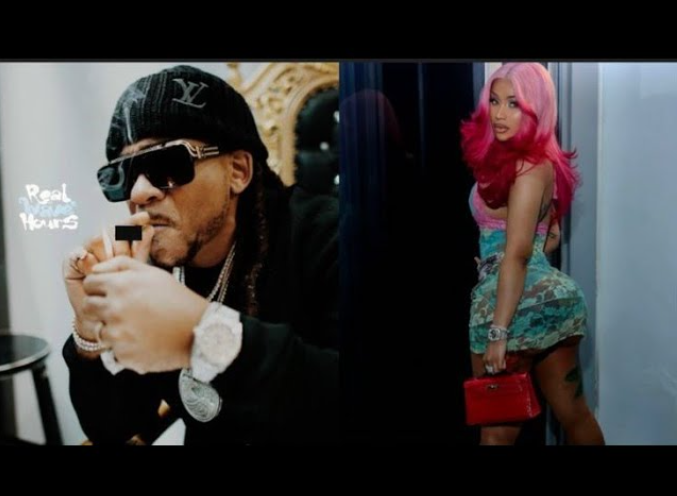
The controversy erupted online as discussions about the relevance of the Harlem wave pioneer, Max B, grew increasingly dismissive. Critics compared his current status to being “washed up like Downey” detergent, arguing his sound is a relic of the mid-2000s with no place in the 2025 musical landscape. This wave of disrespect prompted an immediate and visceral reaction from the Bronx superstar.
In a now-𝓿𝒾𝓇𝒶𝓁 audio clip, Cardi B left no room for interpretation regarding her loyalty. “Baby, I will play the same nine songs I like till my kids go to college,” she declared, punctuating her statement with a signature snort. The message was clear: her appreciation for Max B’s artistry is generational and absolute, a defiant stand against the tide of fleeting trends.
This defense transcends a simple fan endorsement; it highlights a growing cultural fissure within hip-hop. Cardi B’s stance underscores a tension between streaming-era immediacy and foundational artistry. Her comment suggests that true musical impact is not measured by 𝓿𝒾𝓇𝒶𝓁 moments alone but by the longevity and personal resonance of an artist’s work.
The incident has sparked broader conversations about hip-hop memory and education. Commentators have drawn parallels, noting how some newer artists are unfamiliar with icons like Jay-Z. This generational knowledge gap raises questions about how the genre’s history is preserved and valued as it continues its global, rapid evolution.
Max B, a figure whose influence echoes through the cadences of artists like French Montana, A$AP Rocky, and the late Pop Smoke, was recently released from prison. His freedom has been one of the most anticipated events in hip-hop, promising a potential resurgence of his signature melodic, wave style that once dominated the airwaves.
His release from “Cell Block 3” was met with celebration, described by insiders as a major “turnup” with heavy attendance from his dedicated wave community. The energy surrounding his return is palpable, setting the stage for what many hope will be a historic comeback in an industry that has dramatically changed during his incarceration.
The central question now is whether Max B can successfully navigate this new musical terrain. As observers note, time and music have irrevocably changed. The challenge for any artist returning after a long hiatus is to adapt without sacrificing the core identity that earned them a devoted following in the first place.
