
The life of Mike Tyson is less a sports biography and more a grueling post-mortem of the American dream, performed in real-time by a man who was never meant to survive it. At fifty-nine,
Tyson stands as a monument to the damage that occurs when a society takes a traumatized, lisping boy from Brownsville and realizes he can be weaponized for profit. We love to talk about his “comeback” and his “reflection,” but let’s be honest: the version of Mike Tyson the world fell in love with in the eighties was a drug called excitement, and the world didn’t care that the drug was killing the host.
Tyson was built to be a monster. From the moment he was born into the “aggressive and black” war zone of Brownsville, the universe seemed intent on stripping him of any safety. His father was a ghost; his mother was a tragic figure who only knew him as a “wild kid.”
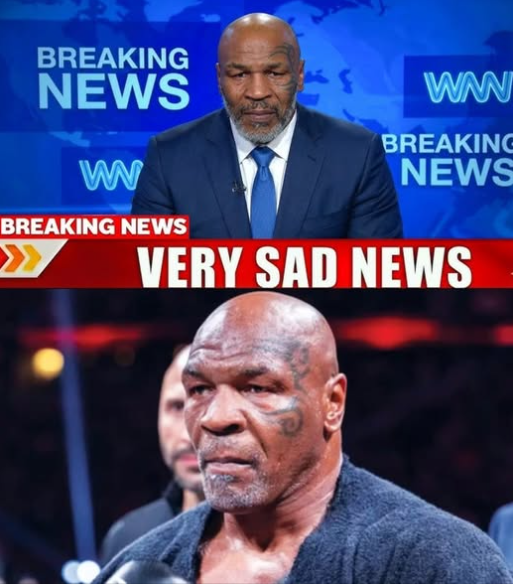
At seven, he was molested in an alley. At nine, he watched an older boy rip the head off his favorite pigeon. That dead bird was the end of Mike Tyson the child and the birth of Iron Mike. When he fought back that day, he realized that violence was the only language the world respected. He wasn’t just a boxer; he was an “annihilated” soul who had been hollowed out to hold nothing but rage.
The hypocrisy of his rise is found in the way the boxing world treated Cus D’Amato. We romanticize the old man in the Catskills who saw a champion in a kid arrested thirty-eight times, but D’Amato didn’t just build a fighter; he built a weapon and then died before he could teach the weapon how to be a person. When D’Amato died in 1985, the “monster” was left unsupervised in a world of sharks.
Don King and a literal army of hangers-on moved in to feast on a man who had the punching power of a god and the financial literacy of the impoverished ten-year-old he still was inside.
The fall was as inevitable as it was spectacular. We watched the four hundred million dollars vanish into a surreal landscape of Bengal tigers, gold bathtubs, and fifty luxury cars. We watched the marriage to Robin Givens dissolve into a televised horror show. We watched the rape conviction and the three years in prison, an era Tyson spent reading and converting to Islam, only to emerge and bite a piece of Evander Holyfield’s ear off in a fit of primal regression. The world acted shocked, but what did they expect? You cannot spend a decade telling a man he is a predator and then act surprised when he stops behaving like a human.
Perhaps the most sickening part of the Tyson saga is that we are still asking him to bleed for us in 2026. The Jake Paul fight was not a sporting event; it was a public health crisis masquerading as a “win” for Netflix. Tyson was fifty-eight years old, suffering from sciatica that left him unable to speak, and recovering from an ulcer that saw him vomit blood and lose half his blood volume on a plane. He fought a twenty-seven-year-old content creator while his brain was literally “sloshing” inside his skull—a medical certainty for a man of his age and history. And yet, the public cheered.
Tyson says he does it for the money, and that is the most honest thing he has ever said. The four hundred million is gone, replaced by a “monthly note” and the desperate need to keep the lights on. He is a man who has spent fifteen years trying to “feel the art of humbleness,” mourning the daughter he lost to a tragic accident in 2009, and trying to keep the “hell” inside him from coming out. He is working on himself, but the world won’t let him. We keep pulling him back into the ring, demanding one more glimpse of the monster, indifferent to the fact that every punch he takes at sixty is a theft from the peace he has actually earned. Mike Tyson isn’t a champion anymore; he’s a survivor of his own legend, and the tragedy is that we won’t let him stop surviving until there’s nothing left to save.
